
 +8618355102826

How to Prevent Porosity Defects in Die Casting Production?
In the field of metal die casting, porosity defects have always been one of the biggest challenges faced by manufacturers. They not only affect the appearance quality of castings but also significantly reduce their mechanical properties. During subsequent heat treatment, porosity may cause blistering, while machining processes can expose internal holes, leading to high scrap rates and increased production costs.
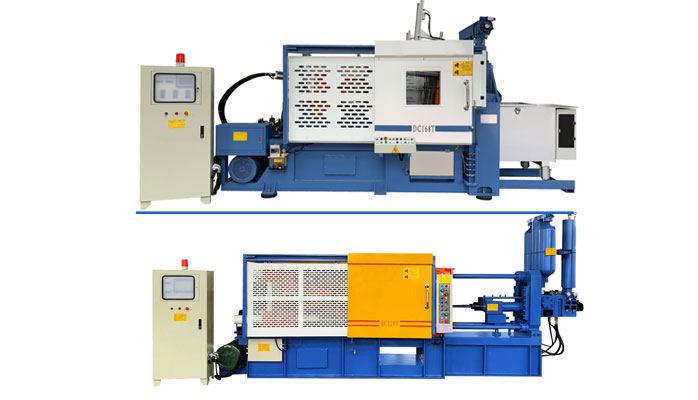
As a professional manufacturer offering both hot chamber die casting machines and cold chamber die casting machines, we understand that porosity is rarely caused by a single factor. Instead, it is usually the result of an imbalance among four key areas: material control, equipment performance, mold design, and process parameters. To effectively eliminate porosity defects, manufacturers need a systematic approach to identify and optimize every stage of the die casting process.
1. Root Cause Analysis: Three Major Causes of Porosity Defects
Before solving porosity problems, it is essential to correctly identify the type and origin of the defect. In die casting production, porosity mainly falls into three categories:
Entrapped Air Porosity
During high-speed and high-pressure filling, unstable metal flow can generate turbulence or spraying effects, causing air inside the mold cavity to become trapped in the molten metal. These pores are usually found near the surface or just beneath the casting skin, with relatively smooth inner walls.
Hydrogen Porosity
During melting, aluminum alloys can absorb hydrogen from the environment. When the molten metal solidifies, hydrogen solubility decreases sharply, causing excessive dissolved hydrogen to separate from the alloy and form gas pores. These pores are generally small and widely distributed, with bright gray inner surfaces and no obvious oxidation marks.
Shrinkage Porosity
Metal alloys naturally contract during solidification. When a casting has significant differences in wall thickness, the thick sections solidify last and may not receive sufficient feeding from liquid metal. As a result, irregular shrinkage cavities can form. These areas are often accompanied by network-like or filament-like micro-porosity.

2. Targeted Solutions: Building a Four-Level Porosity Prevention System
Based on the causes above, manufacturers can systematically reduce porosity through four key areas.
1). Melting and Material Control: Purifying the Molten Metal at the Source
The cleanliness of molten metal is the foundation of casting quality. Melting temperature must be strictly controlled because excessive overheating increases gas absorption in aluminum alloys.
High-quality refining agents and degassing treatments should be applied to effectively remove dissolved gases. Before pouring, operators should remove surface slag and oxides in time. In addition, all recycled materials, tools, and alloy ingots must remain dry and clean to prevent moisture from entering the casting process.
2). Mold Design Optimization: Creating Efficient Venting and Cooling Systems
The mold plays a critical role in controlling metal flow and solidification.
First, the mold must have an effective venting system. Overflow wells and exhaust channels should be properly designed at areas where molten metal finally converges, such as dead zones and thick sections. The total cross-sectional area of overflow channels should generally not be less than 60% of the ingate area.
For castings with large wall thickness variations, good cooling solutions such as cooling inserts, chill blocks, or high-pressure spot cooling systems can be introduced. By controlling the final solidification area and eliminating hot spots, these technologies can significantly reduce shrinkage porosity and internal defects.

3). Optimization of Die Casting Parameters: Achieving Smooth Filling and Solidification
Proper adjustment of process parameters can often deliver immediate improvements.
During injection, the transition point between slow injection and fast injection should be carefully optimized. A longer injection time and lower initial injection speed can help prevent turbulence and air entrapment during cavity filling.
Reducing pouring temperature appropriately can decrease alloy shrinkage and lower the risk of porosity formation. At the same time, using low-gas-release release agents and controlling spraying volume can prevent excessive coating vaporization inside the mold cavity.

4). Equipment Selection and Maintenance: Maximizing the Advantages of Hot and Cold Chamber Die Casting Machines
Equipment performance directly determines the achievable quality level of the die casting process.
For low-melting-point alloys such as zinc and magnesium, hot chamber die casting machines offer high production efficiency and reduced metal waste because the injection chamber is directly immersed in molten metal. However, regular cleaning of the chamber is necessary to prevent increased iron contamination and impurity accumulation caused by long-term exposure.
For aluminum alloys and other high-melting-point materials, cold chamber die casting machines are the standard choice because the injection chamber is separated from the furnace and can withstand higher temperatures.
When using cold chamber die casting machines, manufacturers must ensure sufficient clamping force and injection capacity to avoid incomplete filling and flash defects caused by insufficient pressure. The inner surface of the shot sleeve must also be kept clean to prevent residual metal from creating dead zones where air can become trapped.
3. Solutions: Vacuum Die Casting and Intelligent Temperature Control
With the rapid development of high-end applications such as integrated die casting for electric vehicles, traditional porosity prevention methods are reaching their limits.
For castings requiring extremely high density and mechanical performance, vacuum die casting technology is recommended. By removing air from the mold cavity before injection, vacuum systems can significantly reduce air entrapment and improve casting quality.
In addition, intelligent temperature control solutions, including integrated mold temperature controllers with high-pressure spot cooling technology, can achieve precise management of mold heating and localized cooling.
By maintaining the mold temperature within an optimal process window, these systems not only reduce porosity defects but also shorten cycle times and extend mold service life.
Conclusion
Preventing porosity defects in die casting is not a single-step solution but a comprehensive quality management system involving materials, molds, processes, and equipment.
Whether producing precision components with hot chamber die casting machines or heavy-duty aluminum castings with cold chamber die casting machines, manufacturers can achieve higher first-pass yield and improved production efficiency only by optimizing every detail of the process.
A systematic approach to porosity control enables companies to reduce costs, improve product reliability, and maintain long-term competitiveness in the global manufacturing market.
CONTACT US
|
|
 Qing Yan Road3,Wuxi 214000 JiangSu China
 T/F:86-510-83570133
 M/We Chat: +8618355102826
 E-mail: info@golpmachinery.com