
 +8618355102826
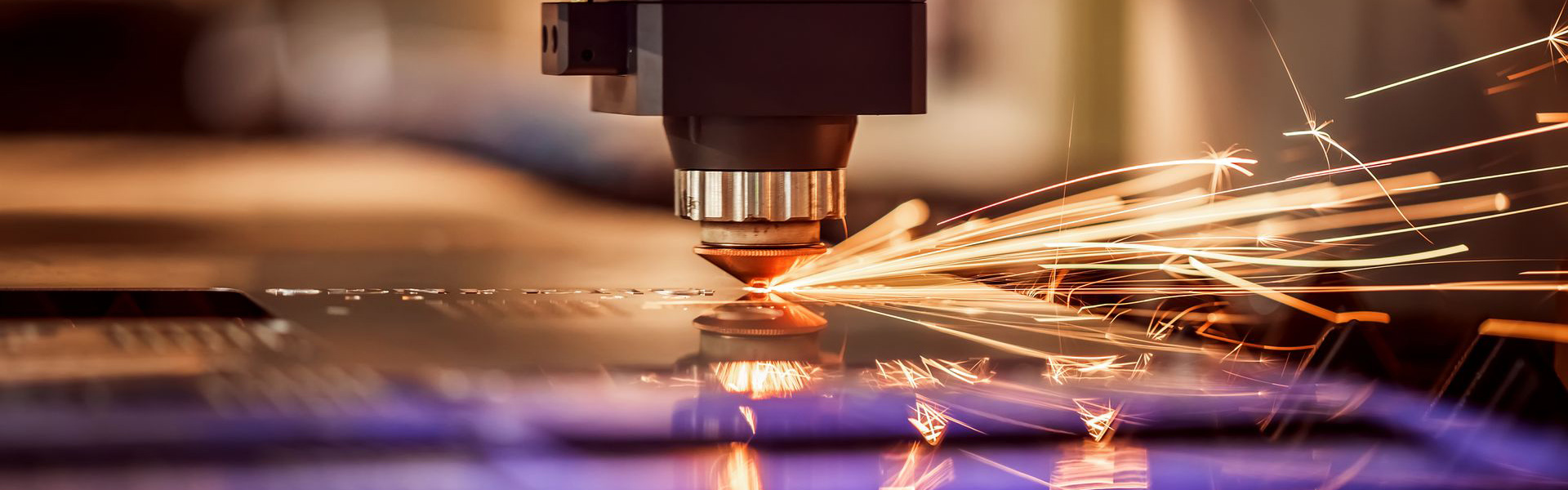
Precision gear Shaping Cutters for CNC Shaping machine
Application and Selection Key Points of Gear Shaping Cutters in CNC Machining
In the CNC machining process system, cutting tools always play a core role. Among them, the gear shaping cutter used in shaping operations is a key factor determining machining efficiency and gear profile quality. It can be said that the cutting tool is the"soul"of a machine tool. Without a suitable shaping cutter, even the most advanced CNC gear shaping machine cannot fully realize its performance.

1. Role of Gear Shaping Cutters in CNC Gear Shaping
Gear shaping cutters are mainly used for machining internal gears, splines, internal keyways, and various complex internal profiles. On CNC gear shaping machines, by using specially programmed CNC cycles together with dedicated shaping cutters, high-precision machining of evenly distributed internal keyways, internal squares, polygonal bores, and missing tooth structures can be achieved.
Under the premise that cutter accuracy and machine rigidity are ensured, the form and position errors as well as dimensional stability of CNC gear shaping can reach the precision level required for involute spline shaping. Practical machining results show that this method not only offers high machining efficiency, but also provides excellent product consistency and stable, controllable quality.

2. Limitations of Traditional Shaping Methods
At present, internal profiles such as polygonal internal squares, multiple keyways, or single keyways are traditionally machined on conventional slotting machines. However, this method has obvious limitations.
On the one hand, it is difficult to achieve perfect concentricity between the cutting edges of the shaping cutter and the positioning datum, due to limitations in cutter manufacturing accuracy. On the other hand, the positioning accuracy of the tool holder on a conventional slotting machine is limited, and tool setting often relies heavily on the operator's experience and repeated manual adjustments. In addition, the worktable can move in multiple directions, making alignment complex and usually requiring multiple trial cuts.
As a result, this machining method is inefficient, highly dependent on operator skill, and difficult to control in terms of symmetry and high precision dimensions. For some blind internal profiles (such as input gear nuts), wire cutting is not applicable. In aerospace manufacturing, electrical discharge machining is often restricted by process requirements. Therefore, the solution of using CNC gear shaping machines combined with shaping cutters shows clear advantages.

3. Structural Design Features of Gear Shaping Cutters
According to the machining characteristics of CNC gear shaping machines, shaping cutters usually adopt a structure directly connected to the machine spindle. Considering the small bottom hole size of internal squares or internal keyways, shank type shaping cutters are commonly used, with Morse taper shanks (such as Morse taper No. 2) to ensure clamping rigidity and positioning accuracy.
In terms of geometric design, the rake and clearance angles of shaping cutters are designed according to standard shaping cutter principles. To reduce manufacturing cost and improve tool utilization, shaping cutters can be designed with two symmetrical cutter teeth. Each tooth consists of two intersecting cutting edges, and machining is completed through single tooth progressive shaping.
4. Influence of Shaping Cutter Geometry on Machining Quality
In gear and spline machining, when the workpiece material has high plasticity, shaping cutters with standard rake and clearance angles often fail to achieve the desired surface finish. For example, when machining alloy steel gears such as 38CrNiMoAlA and 40CrNiMoA, deep scratches may appear on the tooth surface. These defects are difficult to eliminate even after subsequent gear grinding or honing processes.
In such cases, improving cutting performance by increasing the rake and clearance angles of the shaping cutter is an effective solution. For example, using a shaping cutter with a rake angle of approximately 9° and a clearance angle of about 15° can significantly enhance cutting sharpness, allowing the tooth surface roughness to stably reach grade 5-6, thus effectively improving the final machining quality.

5. Key Factors in Shaping Cutter Selection
In actual production, the selection of shaping cutters must consider multiple factors comprehensively:
Production Characteristics
Batch size directly affects cutter selection. For mass production, customized shaping cutters offer advantages in cost and efficiency, while standard shaping cutters are more economical and flexible for single-piece or small-batch production.
Machine Type and Rigidity
The structural rigidity and performance level of the CNC gear shaping machine determine whether high-efficiency shaping cutters with higher cutting parameters can be used.
CNC Machining Strategy
Different machining routes correspond to different cutter configurations, which should be selected based on the overall process plan.
Workpiece Size and Geometry
Complex internal profiles or special structures often require non-standard shaping cutters or specially designed tool structures.
Surface Roughness Requirements
Rough machining and finish machining stages impose different requirements on cutter tooth geometry and cutting parameters.
Machining Accuracy Level
Higher accuracy requirements demand stricter standards for shaping cutter manufacturing accuracy and geometric stability.
Workpiece Material Properties
Different materials determine the choice of cutter material and geometric parameters, which are key factors affecting tool life and machining quality.
6. Conclusion
With the development of CNC gear shaping technology, the shaping cutter is no longer merely a traditional form tool. Instead, it has become a key process component integrating high precision, high efficiency, and high stability. Proper design and selection of shaping cutters not only fully release the machining potential of CNC gear shaping machines, but also provide reliable assurance for high quality machining of complex internal gears and internal profiles.
CONTACT US
|
|
 Qing Yan Road3,Wuxi 214000 JiangSu China
 T/F:86-510-83570133
 M/We Chat: +8618355102826
 E-mail: info@golpmachinery.com